Priorities of Life: Same Intersection—Different Circumstances
Two officers reach the same intersection. The suspect went one way—they don't know which. The decision to stay together or split depends on one thing: the priority of life.
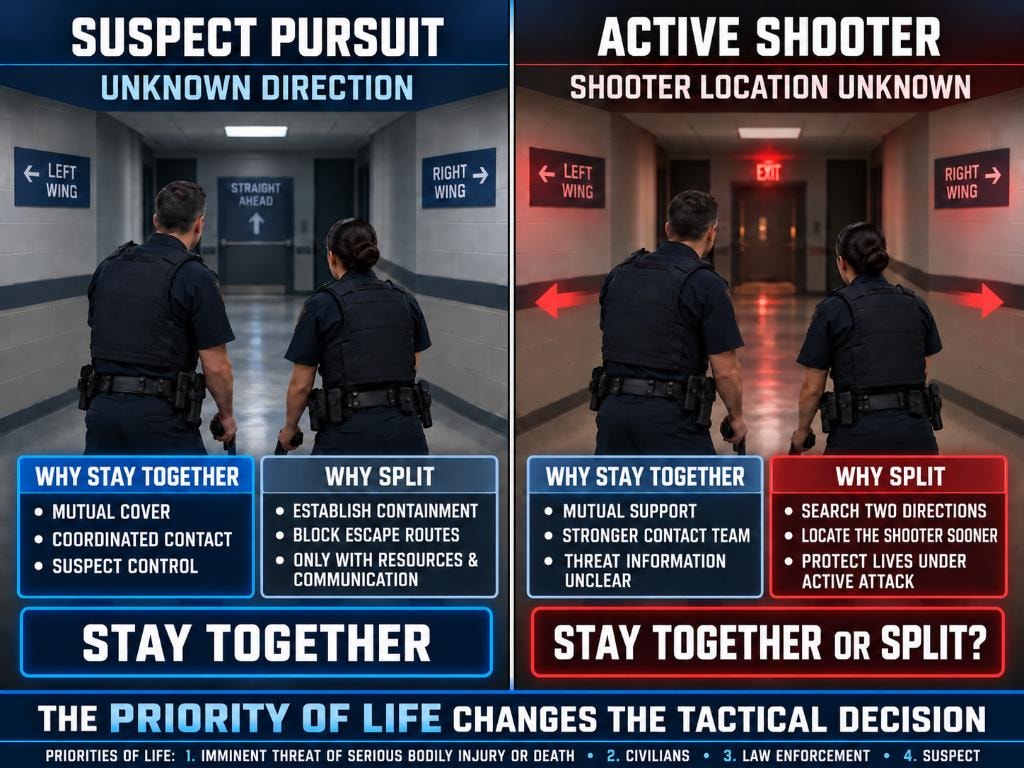
Two partners are pursuing a suspect and reach an intersection where they do not know which direction the suspect fled. In most circumstances, they should stay together. Splitting reduces their ability to communicate, cover one another, control a resisting suspect, and respond if one officer is ambushed or injured. Unless an immediate threat to another person demands action, maintaining contact, establishing containment, communicating the suspect's description and direction, and bringing in additional resources generally protects the greatest number of lives.
Now consider the same decision inside an active-shooter incident. Two officers reach an intersection and do not know the shooter's location. They have no clear indication whether the shooter went left or right.
The tactical problem has changed because the priorities of life have changed. Staying together provides greater tactical security, but choosing one direction may leave an unchecked area where innocent people remain in immediate danger. Splitting allows officers to search both directions simultaneously, potentially locating the shooter sooner—but it also leaves each officer without immediate partner support.
The decision is not simply:
Do we stay together or split?
The more important question is:
Does the possibility of an ongoing attack justify dividing the team and accepting greater risk to each officer to locate the shooter sooner?
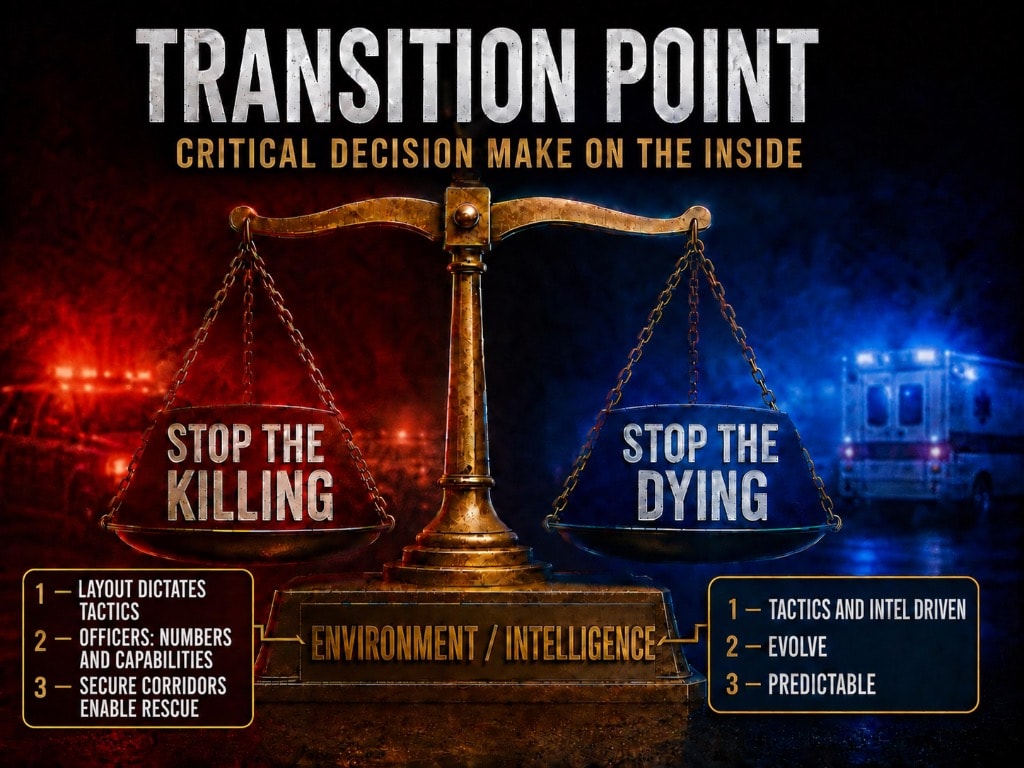
A reasonable priority-of-life framework is:
- Imminent threat of serious bodily injury or death
- Innocent civilians
- Law enforcement personnel
- The suspect
Officers should not automatically separate merely because the shooter's location is unknown. The decision should be based on the totality of the circumstances, including gunfire, screaming, victim or witness reports, surveillance information, the building's layout, available officers, communication capabilities, and evidence that the killing is continuing.
The distinction is critical:
- During an ordinary suspect pursuit, staying together usually best protects the officers and the public.
- During an active-shooter incident, the urgent need to locate an unknown shooter and protect innocent lives may justify accepting greater officer risk—including splitting—when doing so provides a realistic opportunity to stop additional killing.
The priority-of-life model does not automatically require officers to separate. It explains why an active threat may justify a level of tactical risk that would ordinarily be unacceptable during a routine suspect pursuit.
Explore Topics
Written by
Paul Strauss MD
Content creator and writer sharing insights and stories.