TacMed USA's expert commentary, media appearances, and press coverage — spanning active shooter response, tactical medicine, mass casualty command, and workplace violence prevention.
Print / Online
Broadcast
Podcast
Industry
IndustryFeaturedAugust 30, 2026
NTOA — National Tactical Officers Association
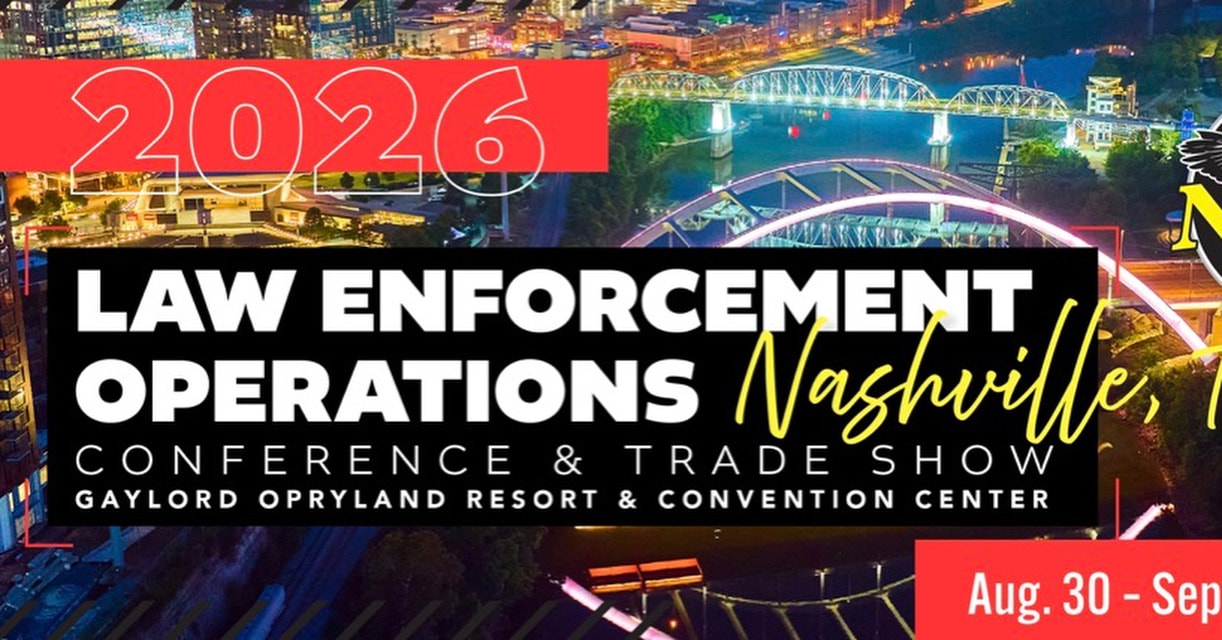
TacMed USA Attending the 2026 Law Enforcement Operations Conference & Trade Show in Nashville
TacMed USA will be attending the 2026 Law Enforcement Operations Conference & Trade Show in Nashville at the Gaylord Opryland Resort & Convention Center. We look forward to connecting with law enforcement professionals, sharing tactical medicine perspectives, and learning alongside the operational community.
In Police Work, Red-Dots Have Little to Do with Shooting, and EVERYTHING to Do with Being a Better Informed Officer When Using Deadly Force
Al Bello argues that red-dot sights are not simply a marksmanship upgrade — they are a situational-awareness tool that helps officers keep both eyes open, process more of the environment, and make better-informed use-of-force decisions. The article calls for scenario-based training that develops decision-making under stress rather than treating firearms instruction as shooting alone.
Seeing before shooting: Why LPVOs belong on the modern patrol rifle
LPVOs can give patrol officers more than added range, providing critical visual information that supports threat identification. Today's patrol officers are expected to solve increasingly complex problems within compressed timelines — active shooters, armed barricades, rifle-equipped suspects and violence occurring in schools, shopping centers, and places of worship. One of the greatest advantages of LPVOs has little to do with marksmanship: it is the ability to gather information more effectively. Magnification should be viewed as a decision-making tool, not a shooting tool. The greatest challenge is not making the shot — it is deciding whether a shot should be taken at all.
Prehospital and Disaster Medicine — Cambridge University Press
Effects of Transport Method and Transport Time on Outcomes of Trauma Patients at an Urban Level-1 Trauma Center
A peer-reviewed study of 69,092 trauma patients at an urban Level I trauma center found that after adjusting for injury severity, patients transported by EMS had a 186% increase in the odds of death compared with those transported by private vehicle. The study also found longer transport times independently associated with worse outcomes. The findings add to a growing body of literature — including prior studies of 74,187 and 103,000+ penetrating trauma patients — with significant implications for how law enforcement and emergency responders approach transport decisions in both individual and mass casualty scenarios.
FBI Releases 2025 Active Shooter Incidents in the United States Report
The FBI has released its annual Active Shooter Incidents report for 2025, documenting the frequency, location, and outcomes of active shooter events across the United States. The report provides law enforcement, emergency responders, and trainers with data-driven insight into incident patterns — including response times, casualty rates, and the settings in which active shooter events most commonly occur. TacMed USA incorporates FBI active shooter data into its curriculum to ensure training reflects current operational realities.
When Active Shooter Medical Doctrine Fails at the Point of Wounding
A peer-reviewed analysis published in JEMS examines the critical gap between NFPA 3000 warm-zone care doctrine and operational reality. The article reviews evidence that potentially preventable deaths in civilian mass shootings are primarily caused by chest and spinal cord injuries — not extremity hemorrhage — and argues that even the 10-minute warm-zone benchmark may be insufficient for casualties developing tension pneumothorax. The Pulse nightclub shooting is examined as a case study in doctrinal failure; the Las Vegas Route 91 response as a model of doctrine properly executed. The article calls for enhanced RTF implementation, universal law enforcement training in chest-wound recognition, and revised time benchmarks for thoracic trauma.
Speaking at the Reserve Police Officers Annual Meeting — Lake Tahoe, Aug 11–14, 2026
Paul Strauss MD will present at the Reserve Police Officers Annual Meeting at Margaritaville Resort Lake Tahoe, open to all officers — full-time and reserves. The presentation focuses on tactical medicine and the command and control of the transition from "Stop the Killing" to "Stop the Dying." Registration is open at the link below.
FLETC Active Shooter / Tactical Medical Training — Chula Vista PD
Training should never stop. Paul Strauss MD attended five days of Active Shooter/Tactical Medical Training conducted by FLETC (Federal Law Enforcement Training Center), hosted by Chula Vista PD. The training offered a valuable opportunity to compare perspectives across all nationally recognized programs — ALERRT, NTOA, Homeland Security, WRCTC, and NAEMT — in a single setting.
Rescue Task Forces vs. Protected Corridors: Rethinking the RTF Model
Paul Strauss MD weighs in on a Threat Suppression, Inc. analysis challenging the traditional Rescue Task Force model. RTFs bring higher-level medical care to AS/MCI incidents — but that capability comes with a time cost. The core question: if a casualty's only life-threatening injury is an extremity hemorrhage controllable with a tourniquet, should evacuation be delayed waiting for Fire/EMS? Strauss argues the evidence increasingly favors protected corridors over dynamic force protection — reducing time to treatment, simplifying command and control, and making better use of limited personnel. "The goal should always be to deliver the right care, at the right time, and get the patient to definitive surgical care as quickly as possible."
Time to Retire the "Golden Hour" — Golden Minutes Are What Save Lives
Paul Strauss MD responds to a Threat Suppression, Inc. analysis challenging the "Golden Hour" doctrine. Modern trauma research shows survival is not governed by a 60-minute window — mortality increases 2–4% for every minute of delay in patients with life-threatening hemorrhage. Strauss argues the real objective is creating Golden Minutes through coordinated law enforcement, Fire/EMS, and trauma system response: "Victims don't die because time runs out; they die when bleeding isn't controlled, airways aren't managed, or evacuation is delayed. Time matters — but decisive intervention matters more."
Paul Strauss MD responds to a Threat Suppression, Inc. analysis on scene safety — examining the gap between the declaration of a scene as "safe" and the operational reality facing Rescue Task Forces. The post explores how premature scene-safe declarations create lethal risk for medical responders and why command discipline around that call is a life-safety issue, not a procedural formality.
LAPD Reserve Officers Help Forge Global Partnerships at Paris 2024 Olympics: A Prelude to Los Angeles 2028
TacMed USA's Paul Strauss MD joined 30 LAPD Reserve Officers deployed to the Paris 2024 Summer Olympics — the largest international contingent of officers — working alongside French authorities to secure the Games. The mission included tactical medicine knowledge exchange with French law enforcement, tourniquet training, and high-level meetings with GIGN and BRI medical directors on hemorrhage control research. Reserve Officer Strauss noted: "The trip highlighted LAPD's professionalism in the world of international policing."
MD Who Volunteers as Reserve Officer Saves a Life on Duty
Paul Strauss MD — board-certified anesthesiologist at Cedars-Sinai and LAPD Reserve Officer — responded to a call about a military veteran in crisis and performed a jaw thrust maneuver for 20 minutes until paramedics arrived, saving her life. The story highlights his mission to bring clinical skills to the streets of Los Angeles and his goal to teach real-world first-aid to every street cop in the city.
Why Most Active Shooter Response Plans Fail Before the First Shot
TacMed USA founder discusses the critical gap between law enforcement arrival times and the average duration of an active shooter event — and why civilian preparedness is the only bridge.
Tactical Medicine in the Warm Zone: Bridging the Gap Between Contact and Care
A deep dive into TacMed USA's approach to warm-zone medical intervention, tourniquet application under stress, and the doctrine behind treating casualties before the scene is fully secure.
California's New Workplace Violence Law: What Employers Need to Know
TacMed USA provides expert commentary on SB 553 compliance requirements, explaining what California employers must do before the July 2024 deadline and what happens if they don't.
The Diamond Formation: Rethinking Entry Team Geometry in Active Shooter Events
TacMed USA's analysis of contact team formations — comparing the diamond, T, and staggered column — and the tactical tradeoffs that determine which geometry saves more lives.
Stop the Bleed in an MCI: Why Tourniquet Doctrine Matters More Than Technique
An examination of hemorrhage control priorities in a mass casualty incident, and why the sequence of intervention — not just the skill — determines survivability.
MCI Command and Control: What Goes Wrong and How to Fix It
A candid conversation on the command failures that compound casualties in active shooter events — from communication breakdowns to the "doers vs. thinkers" problem in first responder culture.
Active Shooter Training for Civilians: Is RUN-HIDE-FIGHT Enough?
TacMed USA weighs in on the limitations of the standard DHS framework and what additional training civilians and workplace teams need to meaningfully reduce casualties.
ATP Throughput: The Metric That Predicts Whether Your MCI Response Will Save Lives
How the concept of Ambulatory Treatment Point throughput — the rate at which casualties move from point of wounding to definitive care — should drive every MCI planning decision.
Chest Seals in a Mass Casualty: When Protocol Meets Reality
TacMed USA breaks down the clinical and tactical considerations for chest seal application in a multi-casualty environment, where resources are scarce and time is measured in seconds.
TacMed USA's instructors bring decades of law enforcement and tactical medicine experience to every media engagement. We provide clear, authoritative commentary on complex topics — translating doctrine into language that informs the public without compromising operational security.
Expert commentary
Active shooter response, MCI command, tactical medicine
"The gap between when a shooting starts and when law enforcement arrives is where most preventable deaths occur. That gap is where we work."
TacMed USA was founded to address the tactical and medical training gap that exists between law enforcement contact teams and the civilian and medical personnel who follow them into harm's way. Our curriculum is built on real incident data, not theory.
For media inquiries, interview requests, or expert commentary on active shooter response, mass casualty incidents, workplace violence, or tactical medicine — contact us directly.