TACTICS
The Transition in an MCI
The goal is not eliminating all risk. The goal is controlling enough risk to begin saving lives.
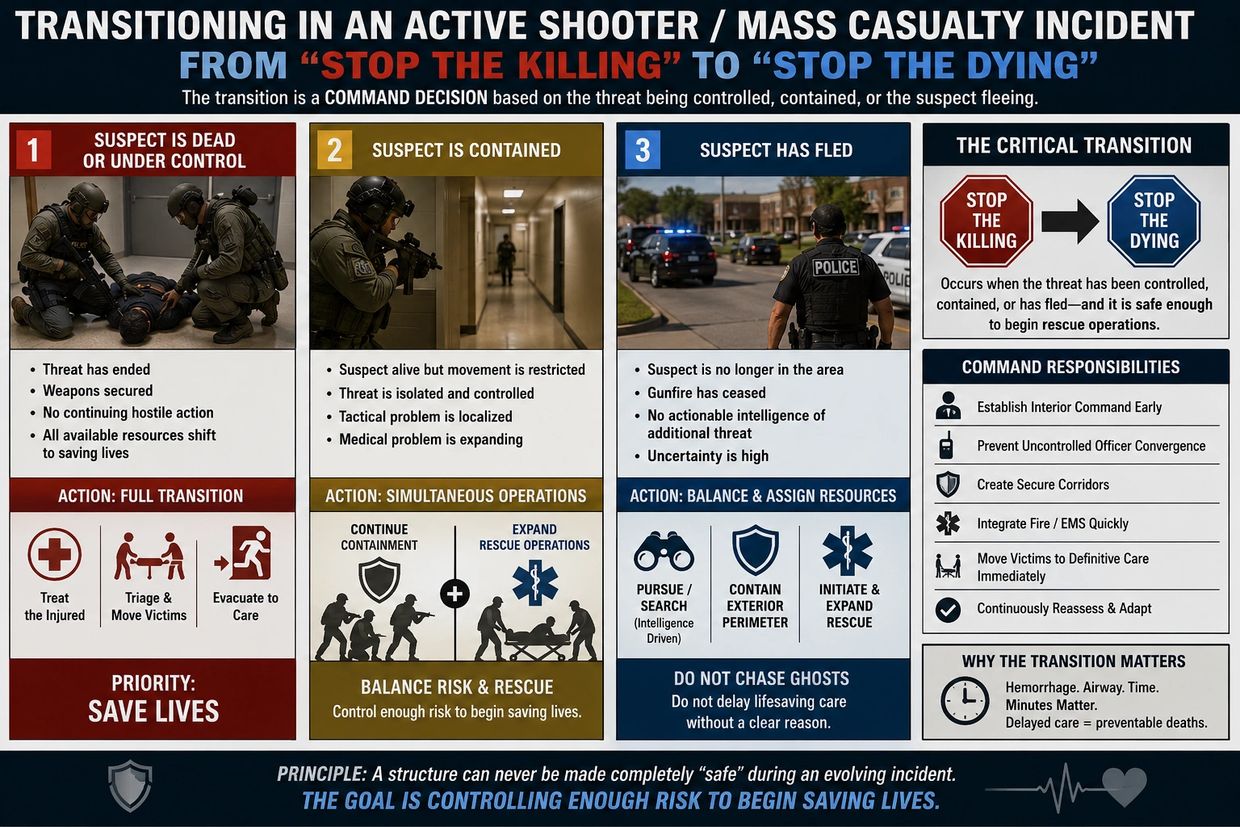
One of the most critical command decisions during an AS/MCI is determining when the operational priority transitions from neutralizing the threat to aggressively saving lives. The transition to "Stop the Dying" does not occur simply because officers feel the threat is over — it occurs when the threat is sufficiently reduced or isolated to permit organized rescue operations without creating unacceptable additional casualties.
Three primary conditions commonly initiate this transition:
1. The Suspect is DEAD or UNDER CONTROL
The clearest transition point. Suspect neutralized, in custody, or physically controlled. Weapons secured. No continuing hostile action. The immediate killing threat has stopped — casualties are now the operational priority.
The danger: officers continue prolonged clearing operations after the suspect is down, even when no gunfire exists and no intelligence supports additional suspects.
2. The Suspect is CONTAINED
The suspect may still be alive and armed, but movement is restricted, LE has positional advantage, and the threat is isolated. The tactical problem becomes localized while the medical problem expands rapidly.
Containment should trigger: interior command organization, secure corridor establishment, transition to rescue operations, and RTF integration. You do not need a completely sterile structure to begin saving lives.
3. The Suspect has FLED
The most operationally difficult transition point. Statistics show most active shooter incidents involve a single suspect. Prolonged searches without stimulus often delay lifesaving care.
"Do not chase ghosts." If gunfire has ceased, no actionable intelligence exists, and casualties remain untreated — command must carefully balance continued pursuit versus immediate rescue priorities.
Suspect Controlled
→ Full transition to rescue operations
Suspect Contained
→ Simultaneous tactical containment + rescue expansion
Suspect Fled
→ Balance pursuit with aggressive lifesaving operations
"Stop the Killing → Stop the Dying" is a command decision about priorities, risk management, resource control, and time-sensitive survivability.