TACTICS
Stimulus Drives Movement
Movement should be driven by stimulus — not momentum. The question officers must constantly ask: what stimulus is driving my speed, direction, and urgency?
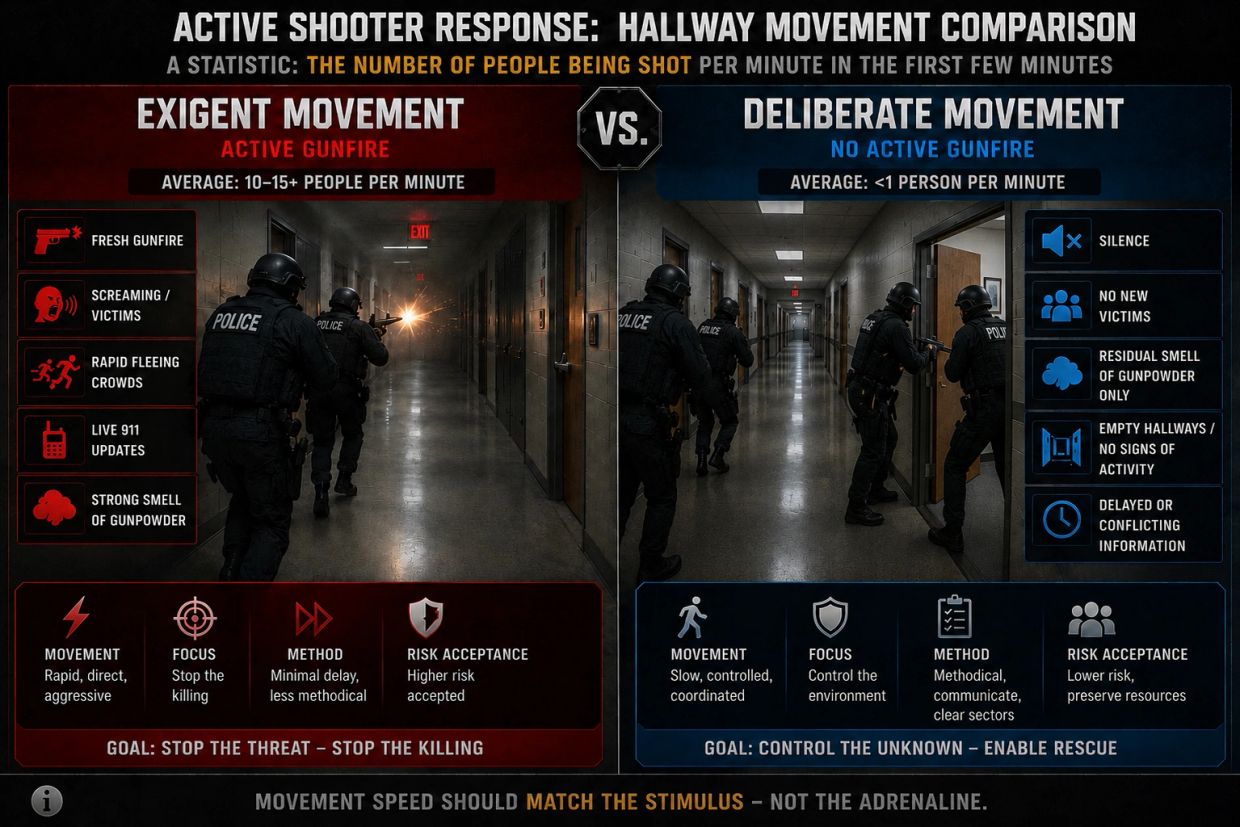
Too often during AS/MCI incidents, officers continue moving aggressively through a structure long after the stimulus that justified rapid movement has disappeared. This creates unnecessary risk, contributes to "Blue Tsunami" chaos, delays medical rescue, and increases the likelihood of blue-on-blue incidents.
Exigent Movement
"Speed to stop active killing"
Appropriate when officers have fresh, immediate stimulus indicating ongoing violence or imminent threat to life.
Examples of Exigent Stimulus
- →Fresh gunfire
- →Screaming victims
- →Rapid fleeing crowds
- →Live 911 updates
- →Visual confirmation of suspect
- →New victims being shot
Deliberate Movement
"Control the unknown"
Begins when the stimulus decreases, becomes stale, or disappears entirely.
Examples of Reduced Stimulus
- →Silence
- →No new victims
- →Residual smell of gunpowder only
- →Empty hallways
- →Delayed or conflicting information
- →Threat possibly contained or fled
The Critical Error
One of the most common operational failures is officers continuing aggressive clearing operations after the suspect is neutralized, barricaded, contained, or has fled. The result: victims remain untreated, RTFs are delayed, evacuation corridors never form, officers chase "ghosts."
Freshness of stimulus matters more than presence of stimulus. Silence itself is information.