TACTICS
MCI Response Evolution
How active shooter doctrine evolved from 2010 to today — from stimulus-free clearing to the command transition that saves lives.
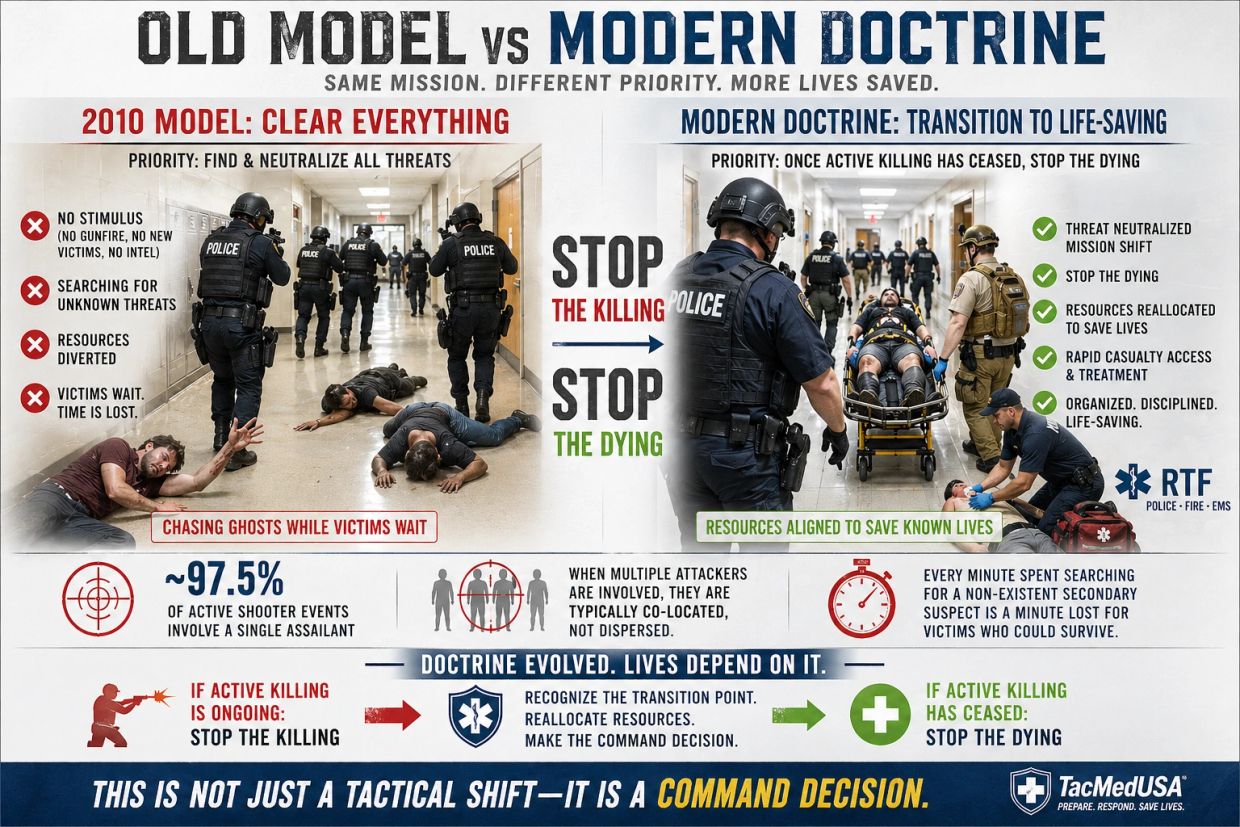
In 2010, law enforcement training emphasized a singular priority during an Active Shooter/Mass Casualty Incident: while active killing is occurring, bypass the wounded and neutralize the threat. That principle remains sound.
However, the follow-on actions often created unintended consequences. Once the threat was down, officers were taught to continue clearing the structure in search of additional suspects — often without any stimulus such as ongoing gunfire, new victims, or actionable intelligence. This led to a critical problem: resources were being committed to chasing unknown threats instead of saving known lives.
Every minute spent searching for a non-existent secondary suspect is a minute lost for victims who could survive with immediate intervention.
Current Data
- →~97.5% of active shooter events involve a single assailant
- →When multiple attackers are involved, they are typically co-located, not dispersed throughout the structure
- →Clearing without stimulus introduces unnecessary risk and exposes officers to ambush while delaying life-saving care
If active killing is ongoing
Stop the Killing
If active killing has ceased
Stop the Dying
This is not just a tactical shift — it is a command decision. Recognizing the transition point and reallocating resources accordingly is what saves lives.